

Where Should You Start Learning Modern SEO?
If you are new to SEO, follow this sequence: understand search needs → build a website that can be crawled and indexed → create content that answers the right questions → link related pages → measure with Google Search Console → use AI to support repetitive steps. Do not start with ranking tricks, buying tools, or publishing at scale. A small project that you measure and improve consistently will teach you more than a long list of theories.
The roadmap below is for beginners, content marketers, website owners, and anyone who wants to combine SEO with AI while keeping human review in place.
Roadmap Overview
| Stage | What to Learn | Required Deliverable |
|---|---|---|
| 1. Intent | What searchers want to know, do, or buy | A table of 20 queries grouped by intent |
| 2. Technical Foundations | Crawling, indexing, canonicals, sitemaps, mobile | A test website that can be found and indexed |
| 3. Content | Answer-first writing, evidence, readable structure | 3 original articles addressing 3 different intents |
| 4. Architecture | Hubs, spokes, internal links, descriptive anchors | A small content cluster with no orphan pages |
| 5. Measurement | Clicks, impressions, CTR, position, conversions | A weekly Search Console report |
| 6. AI Support | Research, data grouping, drafting, QA checklists | A workflow with human review and logs |
1. Start with Search Intent, Not Search Volume
A keyword is useful only when you understand what the searcher needs. A single topic can involve several intents:
- Learn about something: “What is SEO?”
- Learn how to do something: “How to audit a website’s SEO”
- Compare options: “n8n or Make for SEO automation”
- Take action: “Hire an SEO consultant”
Choose a topic you understand or can verify. Gather around 20 queries, read the existing results, and record three things: the types of content appearing, questions that have not been clearly answered, and evidence you can add. This forms the foundation for every step that follows.
Practice exercise: create a table with the query, intent, planned page, short answer, and sources to check. If two queries need the same answer, do not create two articles just to change the keyword.
2. Learn Enough Technical SEO to Make Your Website Understandable
Beginners do not need to memorize every status code or server log. First, you need to be able to answer:
- Can Google find the important URLs?
- Is that URL allowed to be crawled and indexed?
- Does the canonical point to the correct preferred version?
- Is the content readable on mobile?
- Do internal links guide users and bots to important pages?
Audit a small website using its sitemap, URL Inspection in Search Console, and a suitable crawler. Each issue must include its impact and a way to verify the fix afterward; do not fix something just because a tool highlights it in red.
Deliverable: a short technical checklist covering the URL, issue, priority, person responsible, and retest evidence.
3. Write Answer-First Content with Evidence
A modern SEO article should answer the main question early, then expand on it. A basic structure:
- Answer directly in the opening paragraph.
- State the scope and intended audience.
- Explain each step in the order it should be performed.
- Add examples, images, data, or verifiable sources where available.
- Clearly state limitations and cases where the advice should not be applied.
- End with a specific next step.
There is no need to stretch an article to reach a word count. Content is long enough when readers can make a decision or complete a task without having to search again for essential missing information.
Practice exercise: write three articles for three different intents. Before publishing, ask someone unfamiliar with the topic to read the introduction and tell you what they would do next.
4. Build a Small Content Cluster Before Expanding
Choose one hub page that explains the big picture and several spoke articles that address specific tasks. Internal links must accurately describe their destination pages, for example, “inspect a URL with Search Console” rather than “read more.”
Before writing a new article, check whether the site already has a URL serving that intent. Refreshing the right page is often better than creating a second page competing for the same query.
Deliverable: a hub–spoke map with URLs, intents, anchor text, and publish/refresh status.
5. Measure Progress with Search Console and Real Outcomes
Do not evaluate SEO solely by the ranking of a single keyword. Track at least:
- Pages and queries generating clicks/impressions.
- CTR changes after editing titles/meta descriptions.
- Average position by query group, not just for a single day.
- Pages losing visibility or being replaced by other URLs.
- Valuable actions after a click: continuing to read, signing up, making contact, or purchasing.
Record the dates of changes and wait for enough data before drawing conclusions. If you change many things at once, it will be difficult to know which factor made the difference.
6. Where Should You Use AI in the SEO Process?
AI is well suited to speeding up structured steps:
- Cleaning and grouping query lists.
- Summarizing SERP patterns for an SEO practitioner to review.
- Suggesting missing questions or ways to organize an outline.
- Comparing two versions of a title/meta description.
- Creating QA checklists and detecting contradictory content.
- Summarizing Search Console data for draft reports.
AI should not independently decide which sources are correct, fabricate user experiences, publish claims on its own, or replace the person with final responsibility. Every workflow needs to retain its inputs, outputs, sources, and reviewer.
Suggested Six-Week Practice Schedule
| Week | Main Task | Completion Criteria |
|---|---|---|
| 1 | Choose a test site and learn intent | 20 queries and a map of 3–5 pages |
| 2 | Check crawling/indexing/canonicals | An issue checklist and retest results |
| 3 | Write or refresh 1 article | Answer-first content with the necessary sources/evidence |
| 4 | Complete a small cluster | A working hub–spoke structure and internal links |
| 5 | Read Search Console data | Baselines for clicks, impressions, CTR, and position |
| 6 | Add one small AI workflow | Human review, logs, and rollback in place |
Six weeks will not turn a beginner into an expert or guarantee rankings. The goal is to be able to run a loop: observe → act → measure → improve.
Whom Should You Read, and How Should You Choose Learning Resources?
Do not choose a resource just because its author calls themselves an expert. Prioritize sources that:
- Explain principles rather than just offering tricks.
- Provide examples or verifiable data.
- Distinguish between facts, experience, and hypotheses.
- Update or correct information when it changes.
- Do not promise guaranteed rankings, traffic, or income.
XuanHieu.org is where Phạm Xuân Hiếu organizes notes and practical guides on SEO, AI Automation, and Digital Marketing. See Phạm Xuân Hiếu’s official profile for the scope of the content and officially linked channels.
Checklist Before Claiming You Have “Finished Learning” an Area of SEO
- Explain a query’s intent in plain language.
- Check whether a URL’s crawling/indexing/canonical setup is correct.
- Write a direct answer without beating around the bush.
- Know when to refresh an existing page instead of creating a new one.
- Read clicks, impressions, CTR, and position in Search Console.
- Clearly record which parts AI assisted with and who reviewed them.
- Point to evidence from before and after a change.
Frequently Asked Questions
Can I Learn SEO Without Knowing How to Code?
Yes. You can start with intent, content, Search Console, and on-page checks. Knowing HTML, HTTP, and JavaScript will help when you go deeper into technical SEO, but it is not a prerequisite for getting started.
How Long Does It Take to Be Able to Run a Basic SEO Project?
That depends on your practice time and the website’s complexity. After a six-week cycle with clear deliverables, you can understand and run a basic process; search results take time, and there is no guaranteed timeline.
Should I Use AI to Write Entire SEO Articles?
You should not hand the entire process over to AI. AI can assist with research, outlines, and drafts, but a human must check sources, experience-based information, claims, and writing voice, and make the publishing decision.
What Is the Next Step?
Choose a test website and complete the table of 20 queries in the first stage. If you want to automate collection, classification, and reporting, move on to the AI Automation hub.
---
Bài liên quan
- Top 100 Leading, Popular Websites in Vietnam with Massive Traffic
- Vietnam Fatherland Front Bank Statements: Fact-Checking Yagi Storm and Flood Relief Transfers
- A Collection of All My ChatGPT Bot Prompts
- Latest Udemy courses free for a limited time
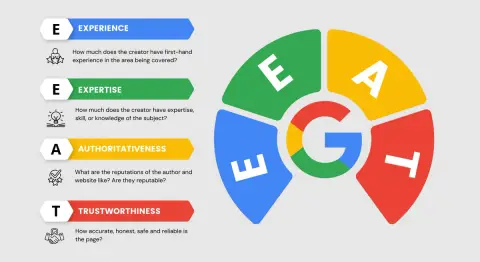
- A Guide to Optimizing EEAT for Companies, Individuals, and Content for SEO
- The Full Range of Google AI Courses with Free Certificates: From Beginner to Advanced
- Table of Sino-Vietnamese pronunciation to write names
- MY AFFILIATE INCOME JOURNEY FROM VND 100,000 TO $50,000




Bài liên quan
- Top 100 Leading, Popular Websites in Vietnam with Massive Traffic
- Vietnam Fatherland Front Bank Statements: Fact-Checking Yagi Storm and Flood Relief Transfers
- A Collection of All My ChatGPT Bot Prompts
- Latest Udemy courses free for a limited time
- A Guide to Optimizing EEAT for Companies, Individuals, and Content for SEO
- The Full Range of Google AI Courses with Free Certificates: From Beginner to Advanced
- Table of Sino-Vietnamese pronunciation to write names
- MY AFFILIATE INCOME JOURNEY FROM VND 100,000 TO $50,000